
How to Create Majestic Drums: From Drum Demo Sessions to Epic Performances and Studio Drum Recording
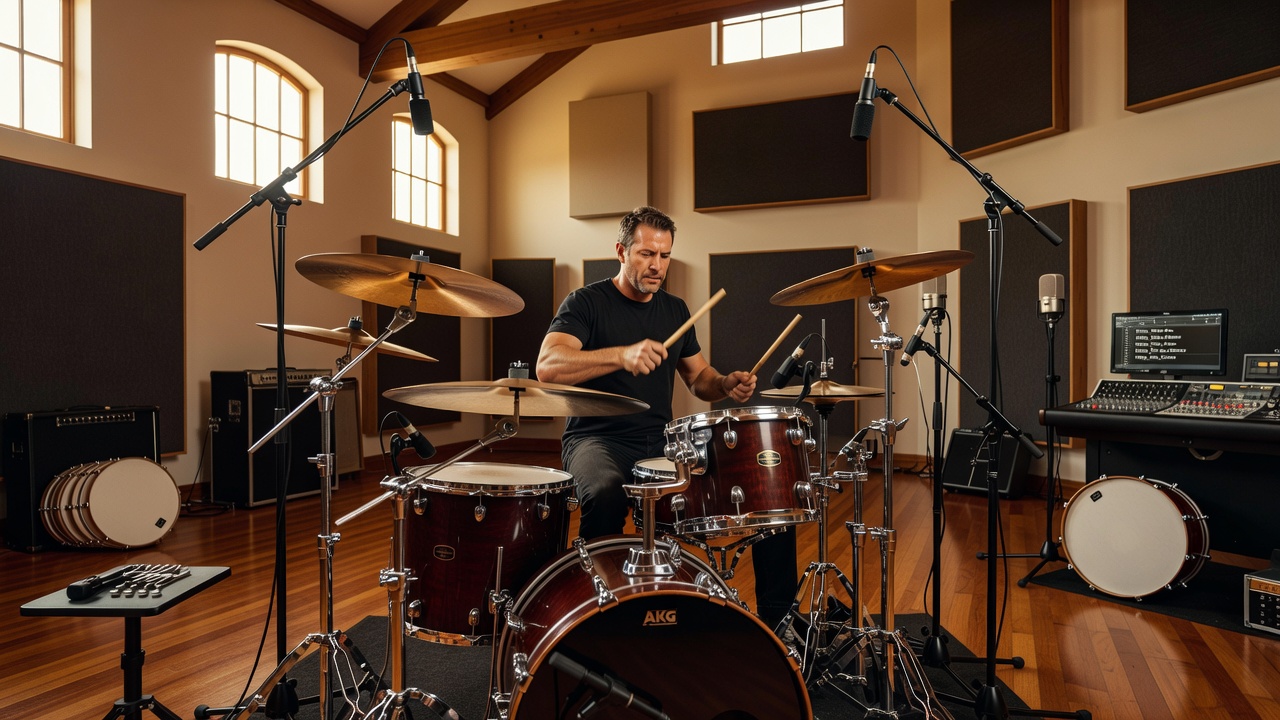
A single drum hit carries more information than most producers realize. Attack, decay, room tone, and the microscopic timing variance between a human hand and a quantized grid - all of it lands on the listener's ear within milliseconds and shapes whether a track feels alive or synthetic. Drummers who chase a truly majestic sound understand this instinctively, even if they can't always articulate why one snare crack feels monumental and another feels flat.
The difference rarely comes down to luck. It comes from preparation, from understanding how a room interacts with a kit, and from knowing how to translate a raw idea into something that survives the transition from rehearsal space to finished mix. Anyone who has sat through a rough drum demo session knows the gap between a promising sketch and a performance that actually earns its place on a record. Some players even study reference material outside traditional music production entirely - for instance, browsing something like 3 majestic drums demo out of curiosity for how the phrase "majestic drums" gets used in completely different creative contexts - before returning to their own sessions with fresh ears. That kind of lateral thinking often sparks ideas nobody would find by staring at a DAW screen.
This piece walks through the full arc: building powerful drum beats from scratch, refining them in a demo environment, delivering an epic drum performance under pressure, and capturing all of it cleanly during studio drum recording. Each stage depends on the one before it.
Understanding What Makes Drums Sound Majestic
Majesty in percussion isn't about volume. It's about proportion - the relationship between low-end weight, mid-range punch, and high-frequency shimmer that makes a drum part feel larger than the room it was recorded in. Producers who chase size by simply turning up the gain usually end up with mud instead of grandeur.
The Physics Behind a Big, Resonant Sound
Drum shells vibrate as a system, not as isolated skins. A kick drum's low-frequency output depends on shell depth, head tension, and the internal air volume moving through the port. A snare's crack comes from the interaction between the top head's attack and the bottom head's snap against the wires. When these elements align, the drum projects with a natural authority that no amount of equalization can fully replicate afterward.
Tuning Strategies for a Grand, Full-Bodied Tone
Tuning each drum in relation to the others - rather than in isolation - is what separates a kit that sounds coherent from one that sounds like disconnected parts. Toms tuned in melodic intervals, a kick tuned to sit just under the bass guitar's fundamental, and a snare tuned to cut without harshness: this triangulation is where the sense of scale actually comes from.
Room Acoustics and Their Role in Perceived Grandeur
A drum kit recorded in a small, heavily damped room will never sound monumental, regardless of how well it's tuned. Reflective surfaces, ceiling height, and strategic placement of room microphones all contribute to the sense of space that listeners associate with majestic drums. Many legendary recordings owe as much to the room as to the drummer.
Building Powerful Drum Beats from the Ground Up
Before a performance can feel epic, the underlying rhythm has to be structurally sound. Powerful drum beats aren't necessarily complex - often they're deceptively simple patterns executed with total conviction and precise dynamic control.
Rhythmic Foundations: Groove Before Complexity
A groove that locks with the bass and holds steady dynamics will always outperform a technically flashy pattern that wanders in tempo or intensity. Establishing a rock-solid pocket first gives every later embellishment somewhere stable to land.
Layering Kick, Snare, and Cymbal for Maximum Impact
Impact comes from contrast. If the kick and snare occupy similar frequency ranges without complementary accents, the beat collapses into a wash of low-mid noise. Staggering cymbal hits slightly off the main beat, or leaving strategic silence before a big snare accent, creates the dynamic tension that reads as power.
Dynamics and Accents That Create Emotional Weight
Ghost notes, accented rim shots, and controlled crescendos give a beat emotional shape. A pattern played at one static volume, no matter how loud, tends to feel monotonous rather than powerful. True intensity depends on contrast between quiet and loud passages.
- Establish tempo and feel before adding ornamentation
- Use frequency separation between kick and snare to avoid masking
- Introduce dynamic swells to build toward key moments
- Leave deliberate space - silence often reads as more powerful than density
Running an Effective Drum Demo Session
A drum demo session exists to test ideas cheaply before committing to a full studio drum recording schedule. Treating it as a throwaway exercise wastes an opportunity to refine arrangement, tone, and performance details that will matter later.
Setting Goals Before You Hit Record
Walking into a session without a clear objective - whether it's testing a new tuning, auditioning a fill, or checking how a part sits against a reference track - leads to aimless takes. Defining two or three specific goals per session keeps the process focused and productive.
Choosing the Right Gear for Testing Ideas
A demo session doesn't require a full professional setup. A single overhead microphone, a kick mic, and a basic interface can reveal ninety percent of what's needed to judge whether an arrangement works. Save the elaborate multi-mic configurations for when the part is finalized.
Turning Rough Ideas into Structured Arrangements
Recording several takes of the same pattern with small variations - a different fill here, a shifted accent there - creates a library of options. Reviewing them with fresh ears a day later, rather than immediately after playing, tends to produce more honest evaluations of what actually works.
Delivering an Epic Drum Performance
Technical accuracy alone doesn't produce an epic drum performance. What separates a merely competent take from a memorable one is intention - every hit communicating something rather than simply filling time.
Mental and Physical Preparation Before a Big Take
Fatigue kills nuance. Drummers who warm up properly, both physically and mentally, retain the subtle dynamic control that separates an inspired take from a mechanically correct one. Rushing straight into a demanding take without preparation almost always shows up in stiffness or timing drift.
Using Dynamics and Space to Build Tension
The most memorable drum moments in recorded music often involve restraint just before release - a held-back verse that explodes into a driving chorus. Understanding when to hold back is as critical as knowing when to hit hard.
Reading the Room: Adapting to Live Energy
In a live setting, audience energy feeds back into performance. A drummer who stays locked to a rigid mental script misses opportunities to extend a build or intensify a break based on what the room is giving back. This responsiveness is part of what makes a performance feel genuinely epic rather than rehearsed.
Capturing It All: Studio Drum Recording Techniques
All the preparation in the world means little if the studio drum recording process fails to capture what actually happened at the kit. Microphone choice, placement, and signal chain decisions determine how much of the performance survives into the final mix.
Microphone Placement for Depth and Clarity
Close mics capture detail and attack; overheads and room mics capture the sense of space that makes a kit feel three-dimensional. Balancing these sources - rather than relying entirely on close mics - is usually what separates a flat-sounding recording from one with real depth.
Signal Chain Choices: Preamps, Compression, and EQ
A clean, well-matched preamp preserves the natural character of the drum before any processing. Light compression during tracking can control peaks without squashing dynamics, while subtractive EQ - removing problem frequencies rather than boosting favorites - tends to produce a more natural result at the mixing stage.
Common Recording Mistakes That Undermine a Powerful Sound
Phase cancellation between mics, over-compression during tracking, and inconsistent mic distances across takes are among the most frequent issues that quietly drain power from an otherwise strong performance. Checking phase relationships early saves significant repair work later.
From Raw Take to Final Mix: Polishing the Recording
The mixing stage is where a good drum recording becomes a genuinely majestic one. Editing, tonal shaping, and spatial placement all happen here, and small decisions compound into a dramatically different final result.
Editing for Timing Without Losing Human Feel
Aggressive quantization can strip away the subtle timing variations that make a performance feel human. Editing selectively - tightening obvious errors while preserving natural push and pull - keeps the recording both tight and alive.
Blending Room, Overhead, and Close Mics
The final tonal character comes from how these three mic groups are balanced against each other, not from any single source in isolation. A mix leaning heavily on room mics feels expansive; one leaning on close mics feels aggressive and immediate. Neither is wrong - the choice depends on the emotional goal of the track.
Final Touches: Reverb, Compression, and Spatial Placement
Parallel compression can add perceived power without sacrificing dynamic range, while carefully chosen reverb extends the sense of space established during recording. These final touches are what push a well-recorded drum track from technically correct to genuinely memorable.
Question?
What's the fastest way to improve the sound of drums without buying new gear?
Retune the existing kit carefully, in relation to itself and to the room, and experiment with head selection before assuming new equipment is necessary. Most tonal problems come from tuning and mic placement rather than the drums themselves.
Question?
How long should a typical drum demo session last?
Sessions focused on two or three specific goals usually run more productively in shorter blocks of sixty to ninety minutes, since fatigue reduces judgment quality after that point. Longer sessions work better when split across multiple days with fresh listening in between.
Question?
Do I need a treated room to get a professional studio drum recording?
Heavy treatment isn't mandatory, but understanding how the existing room behaves is essential. Placing mics thoughtfully and testing different positions in an untreated room often yields better results than assuming treatment alone solves tonal problems.
Question?
How many microphones are actually necessary to capture a full kit?
A functional recording is possible with as few as three microphones - kick, snare, and a stereo overhead pair counted as one source. Additional mics add flexibility during mixing but aren't required to capture a coherent, powerful sound.
Question?
What separates a good drum performance from a genuinely epic one?
Dynamic contrast and intentional use of space typically make the biggest difference. A performance that varies in intensity and responds to the music's emotional arc reads as far more powerful than one played at consistent volume throughout.